
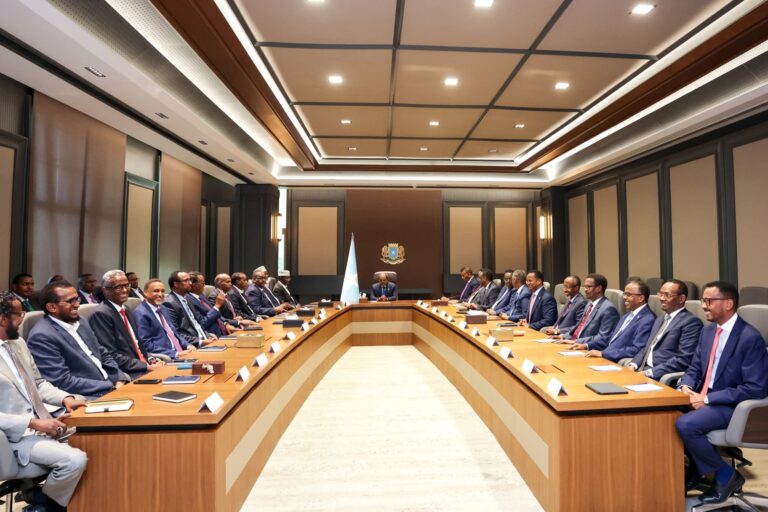
MOGADISHU, Somalia — Talks between Somalia’s President Hassan Sheikh Mohamud and opposition leaders ended Sunday without a deal on election consensus or constitutional changes, officials said.
The meeting, chaired by Mohamud and attended by Prime Minister Hamza Abdi Barre, opposition figures led by former President Sharif Sheikh Ahmed, and the presidents of Puntland and Jubbaland, focused on reaching agreement on elections.
Leaders from Puntland and Jubbaland, along with opposition members, called for elections in Galmudug, Hirshabelle and South West states, whose terms have expired.
President Mohamud rejected the demands, sources familiar with the discussions said, noting that these regional leaders belong to his political party.
He also insisted on his vision of holding unified elections, despite having three months left in his term. His government has proposed completing local council elections in remaining districts before moving to federal-level polls.
Opposition leaders are pushing for a consensus-based process, while Mohamud favors a one-person, one-vote system.
No date has been set for a third round of talks, and neither side has issued a statement on the outcome of the discussions.
The standoff echoes 2021, when then-President Mohamed Abdullahi Mohamed’s attempt to extend his mandate and implement direct elections collapsed, sparking violence in Mogadishu. At that time, Mohamud — then an opposition figure — rejected the reforms, citing lack of consensus. Now, as president, he faces similar resistance from the same opposition and regional leaders.
It remains unclear whether Mohamud will compromise on unified elections or whether regional leaders will soften their stance.
Analysts warn that without agreement, Somalia could again slide into confrontation, a prospect many fear after years of political paralysis, violence and missed reform opportunities.
The deadlock comes amid severe drought and growing humanitarian needs. The international community is closely monitoring the discussions and urging both sides to resolve the political impasse.
Somalia remains at a critical political crossroads, with the outcome of the negotiations likely to shape the country’s electoral framework and broader state-building process.