
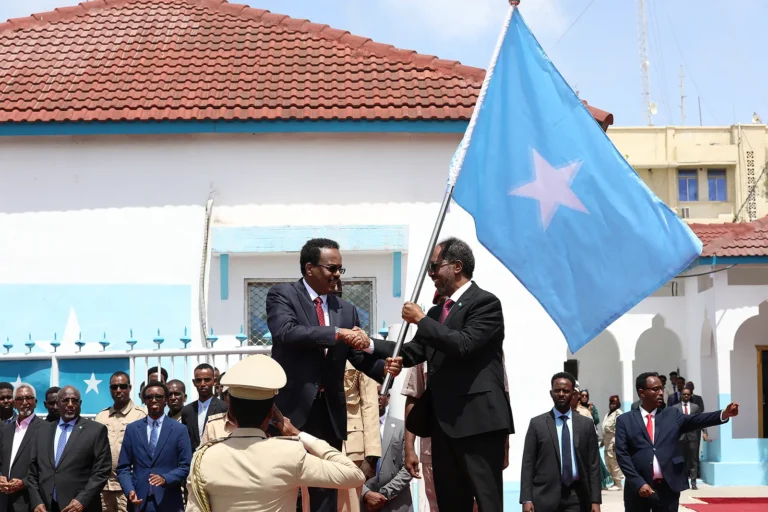
MOGADISHU, Somalia — Inside the gleaming headquarters of the African Union, Somali President Hassan Sheikh Mohamud moved between summit meetings this week, speaking of continental trade, regional security cooperation and Africa’s economic integration with practiced ease.
But as motorcades rolled through the boulevards of Addis Ababa, the political ground beneath him at home appeared far less certain.
In Mogadishu, opposition leaders — backed by the presidents of Jubaland and Puntland — have remained in the capital, pressing for talks over Somalia’s upcoming elections and proposed constitutional changes.
At the center of the dispute is President Mohamud’s push for a nationwide, unified election — a plan that would mark Somalia’s first direct national vote since 1967. His current term has three months left.
For many Somalis, the proposal represents long-delayed democratic progress. For others, it revives memories of extension, violence, and division.
In 2021, then-President Mohamed Abdullahi Farmaajo attempted to introduce “one person, one vote” electoral system while extending his mandate. The move collapsed into armed confrontations in Mogadishu, displacing families.
Somalia ultimately reverted to its indirect clan-based voting system, in which delegates select lawmakers who then choose the president — a compromise designed to prevent deeper conflict.
Today, critics say the country’s security landscape remains too fragile to attempt sweeping electoral reforms without broad consensus.
“This is not simply about ballots,” said political analyst Asha Yusuf. “It is about legitimacy, sequencing and whether the institutions are strong enough to carry such a transition.”
The debate unfolds against the backdrop of a persistent insurgency by al-Shabab, which continues to stage attacks despite government offensives.
“A rushed nationwide vote could overstretch security forces and open space for spoilers,” said regional security researcher Abdullahi Mohamed.
“Extremist groups thrive in moments of political uncertainty,” he added.
Jubaland President Ahmed Madobe and Puntland President Said Deni have called for inclusive negotiations, warning against unilateral constitutional amendments.
Their stance shows long-standing tensions with President Mohamud, which have historically resisted what they see as overreach from Mogadishu.
“Federalism in Somalia was born from compromise,” said governance expert Ali Guleid. “Any major reform must reflect that same spirit of negotiation.”
Supporters of Mohamud’s proposal argue the country cannot indefinitely postpone universal suffrage. They say Somalia must begin building the systems required for direct elections, even if imperfect.
Yet opponents counter that political timing is crucial — and that pushing ahead without consensus risks repeating the instability of 2021.
Whether President Mohamud compromises with opposition leaders or pushes his unified election plan may determine if Somalia navigates reform peacefully or reenters another destabilizing political confrontation.