
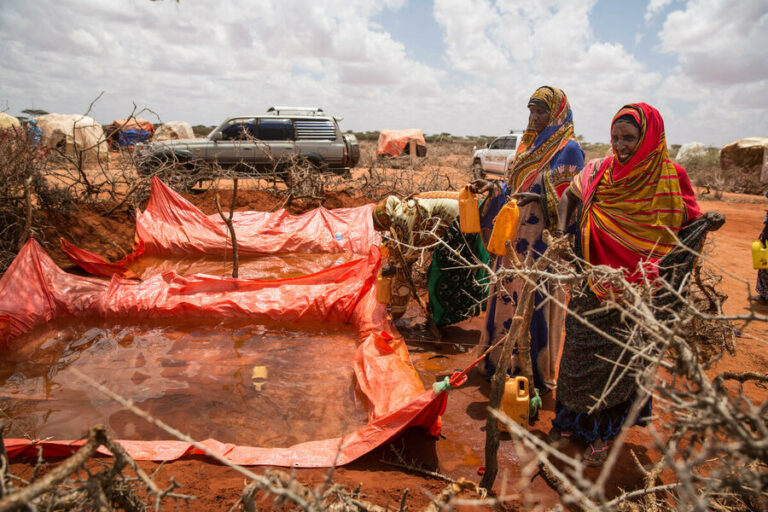
MOGADISHU — The United Nations World Food Programme warned Tuesday its emergency food and nutrition assistance in Somalia could halt without urgent new funding.
The agency said its resources could be depleted within weeks, leaving millions without life-saving support amid drought, crop losses, and large-scale displacement nationwide.
Somalia faces one of its most severe hunger crises in years, driven by failed rains, ongoing conflict, and a sharp drop in funding.
About 4.4 million people — one-quarter of the population — face crisis-level food insecurity or worse, including nearly one million experiencing severe hunger.
“The situation is deteriorating at an alarming rate. Families have lost everything, and many are already being pushed to the brink,” said Ross Smith.
WFP, Somalia’s largest humanitarian agency, worked with donors and partners to avert famine in 2022 during the country’s longest recorded drought on record.
Funding shortfalls have forced WFP to cut emergency food assistance from 2.2 million people in early 2025 to just over 600,000 currently receiving aid.
Nutrition programs for pregnant and breastfeeding women and young children have dropped from nearly 400,000 in October 2025 to just 90,000 in December.
Without immediate funding, assistance could end by April 2026, leaving millions of vulnerable people without life-saving food and nutrition support in crisis-affected areas.
“In 2022, WFP showed that when we have the resources, we can scale up quickly and reach people at their greatest need,” Smith said.
The humanitarian, security, and economic consequences would be devastating, with effects likely felt beyond Somalia’s borders if funding does not arrive urgently, the agency said.
WFP is calling for USD 95 million to continue supporting Somalia’s most food-insecure people between March and August 2026 to prevent a catastrophe.