
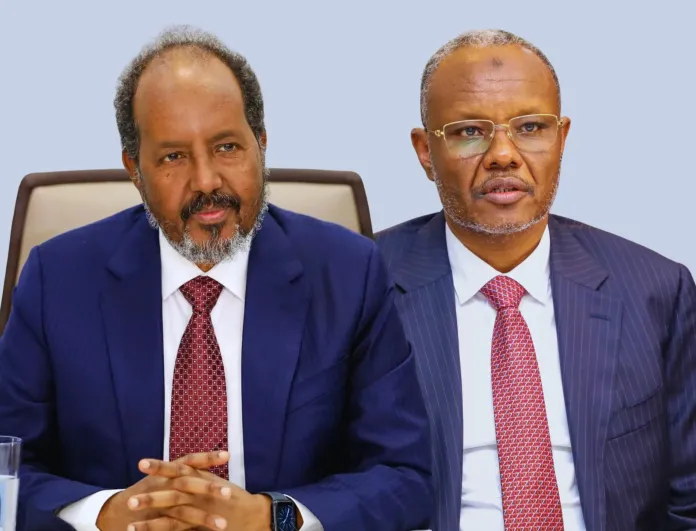
MOGADISHU, Somalia— A political rift is widening between Somalia’s president and South West State leader over constitutional reforms, elections, and regional versus federal authority.
President Hassan Sheikh Mohamud faces major challenges as disagreements intensify with Abdiasis Hassan Mohamed Laftagareen, South West State’s president, over governance, reforms, and distribution of federal power.
The dispute follows Somalia’s federal parliament approving contested constitutional amendments March 5, which Mohamud signed into law March 8, sparking debate among leaders and opposition figures.
Tensions escalated after Laftagareen withdrew support for the federal government’s reform campaign and opposed local council elections planned in mid-April across aligned federal member states.
Sources say the Somali presidency at Villa Somalia increased political pressure on Baidoa, the South West administrative capital, signaling possible efforts to weaken regional leadership.
South West officials responded by tightening security in Baidoa and nearby towns, citing fears that federal moves might undermine authority or replace the regional administration’s leadership.
Officials in both Mogadishu and Baidoa say federal authorities interfered in regional structures, restricted funding, and tried to influence the security command of South West State.
Until recently, Laftagareen had been a reliable ally of Mohamud, supporting plans to move Somalia from clan-based elections to one-person-one-vote elections nationwide.
South West tensions have historical weight, as Laftagareen rose to power after the contentious 2018 regional election, which followed unrest after former Al-Shabab deputy Mukhtar Robow was barred.
Mohamud traveled to Djibouti this week for trilateral talks with President Ismail Omar Guelleh and Ethiopia’s Prime Minister Abiy Ahmed, with Ethiopian forces stationed in Baidoa.
The South West administration issued a travel restriction for Somali National Army officers, ordering them to remain in Baidoa during ongoing security operations.
The standoff marks Somalia’s struggle over constitutional amendments, election reforms, and distribution of authority between federal government and regional administrations.
Analysts say the confrontation in Baidoa will test whether Somalia’s constitutional reforms strengthen federalism or deepen political divisions across the country.