
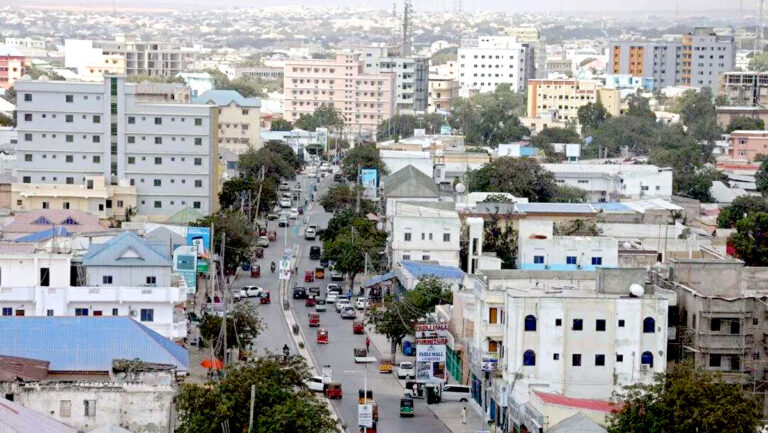
MOGADISHU, Somalia — Before dawn breaks across the sprawling districts in the capital, Mogadishu, families pause at the faintest knock on their gates, bracing for local officials demanding road fees many say they cannot possibly pay.
From Wadajir to Kaaraan, the stories remain painfully similar. Workers arriving unannounced, listing homes, and warning residents that refusal to pay will bring consequences. “We live expecting punishment,” said mother Hani Mahad.
Local uthorities describe the charges as mandatory contributions for interlock road construction, but families say the $1,500 demanded per house exceeds what most households earn in several months. “It’s not a fee,” Hani said. “It feels like a sentence.”
Residents in more than 17 districts report harassment linked to the payments, including gate removals, padlocks cut open, and threats that homes will be seized or rented out. “They treat us like trespassers,” said elder Abdow Mohamed.
Many who resist say they are rounded up and taken to police station yards, kept without formal arrest all day, and released after sunset. “No paperwork, no charges,” said shopkeeper Farhan. “Just pressure until you obey.”
Business owners describe equally heavy-handed tactics, saying their storefronts are threatened with closure or confiscation. “One official pointed at my shop and said, ‘This can be ours by tomorrow,’” recalled vendor Ifrah Ali. “I couldn’t sleep that night.”
Residents question why district leaders prioritize narrow neighborhood roads while major public routes remain crumbling and impassable. “Fix the roads the city relies on,” said elder Hassan Hussein. “Not the ones you can use to squeeze families.”
Rumors of secret agreements between district commissioners and private contractors have spread across Mogadishu, with many believing officials earn commissions for each household payment. “People don’t invent stories without reason,” said community organizer Abdulkadir Osman.
Despite mounting public complaints, Mayor Mohamed Hussein Mungab has remained silent, fueling frustration among residents who already pay taxes, service charges, and informal fees that rarely translate into public improvements.
Citywide, families say they still lack basic services — clinics, water networks, functioning schools, and adequate security — despite years of payments. “We pay everything,” said mother Aamina Warsame. “But nothing ever reaches our homes.”
Officials’ tactics, residents say, erode fragile trust between civilians and government in a city long scarred by conflict. “We survived war,” said Fartun Ahmed. “But this humiliation is something entirely different.”
Many argue the fee system effectively punishes poverty, targeting households least able to navigate legal processes or defend themselves. “They know we can’t fight back,” said construction worker Mahad. “That’s exactly why they pressure us.”
Legal experts warn that collecting money through intimidation violates Somali law, undermines due process, and encourages systemic corruption. “Coercion is not governance,” said Sahra Noor. “It represents an abuse of public authority.”
Human rights advocates say the informal detentions alone constitute serious violations, especially when officials intentionally avoid documentation.
“It’s deliberate evasion of accountability,” said activist Abdifatah Mohamud. “When the state hides actions, something deeply wrong is happening.”
Teachers worry children are internalizing the fear adults now carry daily, watching confrontations outside their homes. “A child should never witness their parent being threatened,” said teacher Ayan Farah. “It shapes how they experience their country forever.”
Economists warn the escalating financial burden is destabilizing fragile households, forcing some to sell furniture, livestock, or business stock to comply. “People are stripping away their livelihoods,” said analyst Mire Ali. “That’s the opposite of meaningful development.”
Community organizers argue true progress requires transparent budgeting and inclusive planning, not coercive neighborhood campaigns.
“If these roads were genuinely needed, people would contribute willingly,” said organizer Asli Guelleh. “Intimidation proves something hidden is happening.”
Residents say the current pressure erases their dignity, turning ordinary citizens into targets instead of partners in progress. “We want to build our city,” said mother Hawo. “But we can’t when we’re treated like enemies.”
Elders from multiple districts are now urging Mayor Mungab to launnch an independent investigation, arguing that unchecked intimidation risks destabilizing communities already struggling with poverty, displacement, and insecurity.
For many Mogadishu families, the demand is simple and universal. “We want development, yes,” Amina said softly. “But not through fear. We need leaders who protect us, not ones who terrify us.”
For security reasons, some names in this report have been changed at the request of those interviewed.