
MOGADISHU, Somalia — The UAE reportedly offered Uganda $500 million to withdraw troops from Somalia, deepening tensions between Mogadishu and Abu Dhabi.
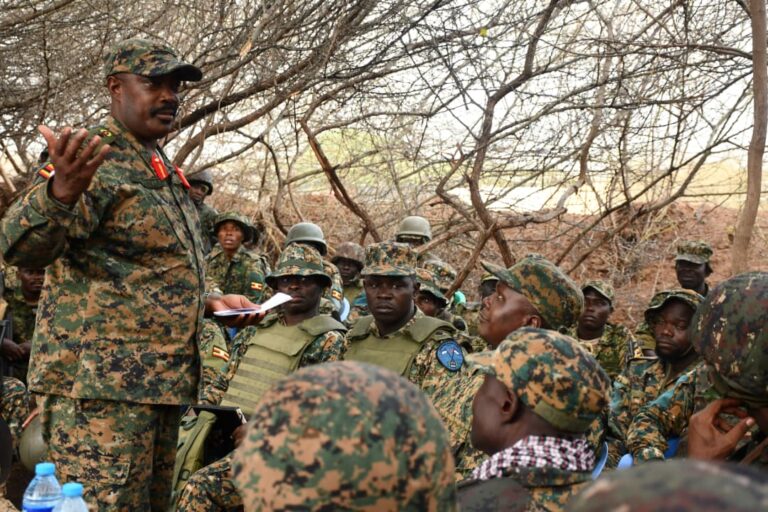
Uganda, the first country to deploy troops to Somalia in 2007, announced last week it had begun withdrawing its forces from Somalia.
Gen. Muhoozi Kainerugaba, Uganda’s chief of defence forces, set August 2027 as the target for withdrawal, potentially ending two decades of deployment.
The African Union Support and Stabilization Mission (AUSSOM) in Somalia, faces challenges following reductions in international support as Uganda prepares to withdraw.
The mission plays a central military role supporting Somali forces fighting al-Shabab, the militant group waging an insurgency for more than a decade.
The mission’s financial crisis emerged after the United States notified the African Union in July of plans to cut funding and logistical support.
The decision affected fuel, food, water and medical evacuations, adding pressure on troops deployed in frontline areas across Somalia.
According to BarazaBrief, the UAE offered Uganda hundreds of millions of dollars to withdraw all of its forces, including those serving under AUSSOM from Somalia.
The report put the alleged payment at nearly $500 million, alongside investment and project pledges. The claims have not been independently verified.
The publication linked the alleged arrangement to regional competition over Somalia, including Türkiye’s planned spaceport near Warsheikh and its oil exploration activities.
The allegations emerge amid a diplomatic confrontation between Mogadishu and Abu Dhabi. In January, Somalia cancelled all agreements with the UAE.
The cancelled deals covered security, defence and port operations at Berbera, Bosaso and Kismayo, in Somaliland, Puntland and Jubaland, respectively, in Somalia.
Somalia said the decision protected its sovereignty, territorial integrity and national unity amid concerns over Abu Dhabi’s dealings with regional states nationwide.
Mogadishu says foreign governments should engage Somalia through its federal government, rather than treat individual regions as independent political entities.
The dispute exposed disagreements over federal authority and regional administrations’ roles in security and agreements. Puntland, Jubaland and Somaliland rejected Mogadishu’s decision.
They said agreements reached with Abu Dhabi should remain in force, underscoring divisions over who can negotiate foreign partnerships on Somalia’s behalf.
The UAE maintains commercial and security ties in the region, including investments in strategic ports and support for local security forces also.
Those ties have raised questions about how Somalia’s federal system manages foreign partnerships, when regional authorities negotiate independently with foreign governments.
The dispute was fuelled by Israel’s recognition of Somaliland in 2025. Somaliland declared independence from Somalia in 1991 but remains internationally unrecognised.
Somalia has accused the UAE of encouraging Somaliland’s separation and strengthening its relations. President Hassan Sheikh Mohamud repeated the claim in October.
The UAE’s role in Israel’s recognition of Somaliland has become controversial. Abu Dhabi has not confirmed any role, and the claim remains disputed.
The row has widened to allegations that Somali territory served as a transit route for fighters and supplies destined for Sudan’s RSF.
A United Nations investigation into Sudan’s war reported in September that networks used Somalia and transit locations to facilitate support for RSF.
The report cited entities, intermediaries and recruiters, describing movements of personnel, training, weapons and logistical support. It did not establish government authorisation.
The UAE has rejected allegations that it provides financial or logistical support to Sudan’s paramilitary Rapid Support Forces, known as the RSF.
The findings have added international scrutiny of supply networks linked to Sudan’s war, while leaving questions about activity through Somali territory unresolved.
For Somalia, the allegations raise concerns about its territory being used in conflicts abroad, as it seeks control over airspace and ports.
The tensions complicate Somalia’s security partnerships. The UAE has trained and equipped Somali forces, while Uganda remains a contributor to AU operations.
Uganda’s departure comes as Mogadishu faces a security transition and strained relations with a regional security partner involved in Somalia’s military affairs.
The key question is whether Somali forces and the remaining mission can maintain security as Uganda prepares to leave if funding falls.
Nearly 20 years after its first deployment, Uganda’s withdrawal could reshape Somalia’s security arrangements amid regional competition over ports, unity and influence.