
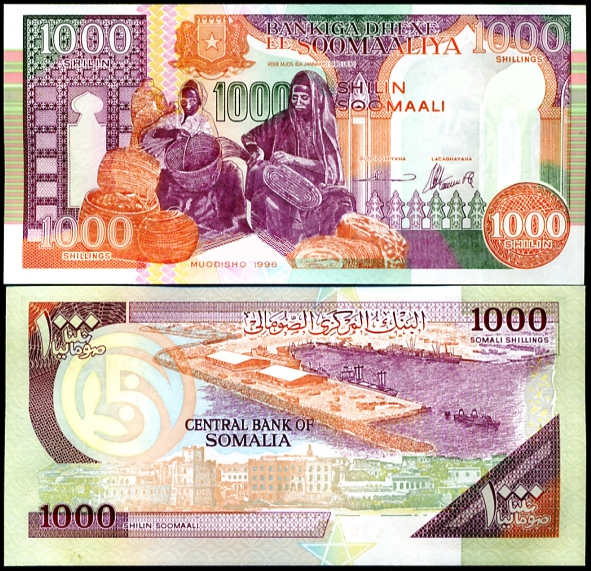
MOGADISHU, Somalia — At a busy market in Mogadishu, a crumpled 1,000-shilling note is handed over for vegetables — and quickly refused. Within seconds, the buyer pulls out a phone to pay instead.
Across parts of Somalia’s capital, scenes like this are becoming increasingly common as traders stop accepting the country’s most widely used banknote, exposing the fragility of a cash system many had long relied on.
The rejection of the 1,000-shilling note has disrupted daily life for thousands of residents, particularly low-income earners who depend on small cash transactions for transport, food and basic services.
“We cannot take this money anymore because it is worn out and difficult to use,” said a trader in Mogadishu’s livestock market, holding up a torn note. “Sometimes it is rejected even when we try to pass it on.”
In districts such as Heliwaa, residents said the shift happened suddenly, with traders and transport operators refusing the currency and demanding payment in U.S. dollars or mobile money.
“It started this morning,” said one resident. “You go to the market or try to get on a bus, and they tell you they don’t accept shillings anymore.”
For many, the change underscores a deeper reality: Somalia’s economy has quietly evolved into one dominated by dollars and digital payments, leaving its national currency increasingly marginalized.
Economists say the problem is rooted in years of neglect, with worn and damaged notes circulating far beyond their intended lifespan and no large-scale currency replacement program in place.
“The Somali shilling has lost public confidence over time,” said an economist in Mogadishu. “When people cannot rely on the physical quality or value of money, they turn to alternatives they trust.”
Those alternatives — primarily mobile money and U.S. dollars — are now the preferred means of exchange in much of the capital, offering convenience and perceived stability.
But the shift is not without consequences. For those without access to mobile phones or dollar cash, the rejection of the shilling creates new barriers to everyday life.
“Some people are being left behind,” said a minibus driver who has stopped accepting shillings. “If I take it, I cannot use it elsewhere. So I have no choice.”
The Somali shilling, introduced decades ago, now survives largely in small denominations like the 1,000 note, once a staple of daily commerce. Its decline has been gradual but persistent.
April’s developments in Mogadishu echo similar patterns seen in parts of central Somalia, where the currency has already been pushed out of everyday use.
For now, the sight of rejected banknotes in Mogadishu’s markets offers a stark symbol of a broader economic shift — one where cash is losing ground, and confidence in the national currency continues to erode.