



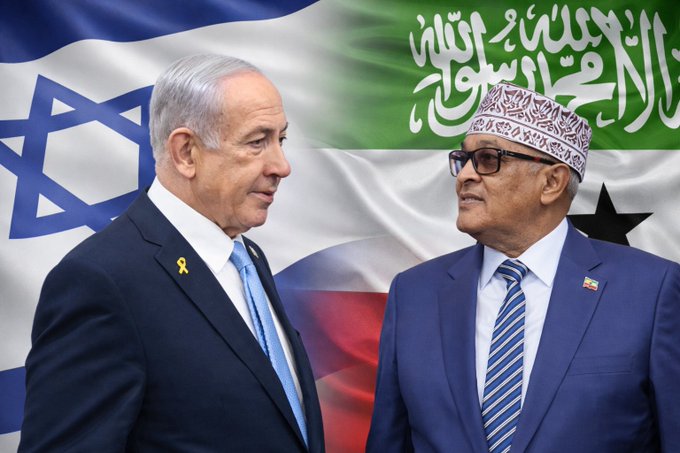
MOGADISHU, Somalia — Friday jolted the Somali capital as news spread that Israel had recognized Somaliland, a self-declared breakaway region. Somali officials denounced the move as an attack on sovereignty and a potential spark for regional unrest.
Somali President Hassan Sheikh Mohamud condemned the recognition as a “blatant attack on Somalia’s sovereignty and territorial integrity,” warning it could embolden extremist groups and destabilize the fragile region.
“We will not allow Israel to establish a military base in our territory to launch attacks on other nations,” Mohamud said. “Somalia will also not permit the relocation of Palestinians from Gaza to our country.”
In Mogadishu, residents protested, burning Israeli flags and images of Prime Minister Benjamin Netanyahu, while Somalia’s parliament moved to nullify Somaliland’s recognition.
This comes amid growing international interest in the Bab al-Mandeb Strait, a strategic maritime chokepoint linking the Red Sea and Gulf of Aden near Somaliland. Analysts say Israel’s recognition appears driven more by strategic calculations than legal considerations, raising fears of an intensifying geopolitical contest in the Horn of Africa.
Regional Reaction and Security Risks
Following Israel’s move, Yemen’s Houthi leader, Abdul-Malik al-Houthi, warned that any Israeli presence in Somalia would be considered a military target. Security analysts warn that establishing a base in Somaliland could turn the region into a frontline, with civilians caught in the crossfire.
In Borama, a town in Somaliland’s Awdal region, locals voiced concern over potential foreign military activity. “We are already struggling with our daily lives,” said Mohamed Abdi, a shopkeeper. “If an army comes into this region and the Houthis respond, we will be trapped in the middle.”
“Any attempt by Israel to use Somaliland as a platform for strikes against the Houthis risks turning parts of Somaliland into a frontline,” said Ahmed Warsame, a Horn of Africa security analyst based in Nairobi. “This would put civilians at risk, inflame local tensions, and potentially create a permanent zone of conflict in northern Somalia.”
Dr. Fatima Elmi, a regional security expert, said Israel’s ambitions could destabilize the Horn of Africa. “A foreign military base intended for operations against Yemen will inevitably draw attacks from the Houthis. It is a dangerous escalation that could destabilize Somalia internally while intensifying regional conflicts,” she said.
Legal and Political Disputes
Somaliland declared independence from Somalia in 1991, after the central government collapsed. It has maintained its own administrative structures in Hargeisa but remained unrecognized internationally—until Israel’s move on Friday. Somali legal scholars and political officials argue the recognition violates international law and undermines Somalia’s territorial integrity.
“State recognition cannot be used as a political tool,” said Professor Christine Gray, an international law expert. “Legal statehood requires effective control, functioning governance, and the consent of the population. Somaliland does not meet these criteria across its claimed territory.”
Several northern regions—including Sool, Sanag, Ayn, Haylan, and Awdal—reject Somaliland’s claims. Collectively known as the Northeast State, these areas operate under Somalia’s federal system. On Aug. 30, 2025, the Northeast State held elections and elected President Abdikadir Ahmed Ali “Firshiye,” reaffirming their alignment with the Federal Republic of Somalia.
Even within Somaliland, governance is dominated by the Reer Sheikh Isaq clan, raising questions about inclusivity and legitimacy. Experts stress that genuine self-determination requires the consent of all communities in the claimed territory.
Potential Dangers for Somalia and the Region
Analysts say the recognition threatens Somalia’s fragile federal system by legitimizing a breakaway region that lacks broad internal consent. It risks encouraging separatist movements elsewhere in the Horn of Africa and could spark political and military confrontations with neighboring states.
“Unilateral recognition undermines the rule of law, destabilizes governance structures, and may provide a pretext for foreign military activity,” Warsame said. “If Somaliland becomes a base for attacks on the Houthis, Israel could turn parts of northern Somalia into a conflict zone, putting civilians and local communities directly in harm’s way.”
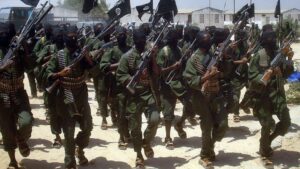
Al-Shabaab continues to exploit governance gaps in southern Somalia, posing an ongoing security threat. Warsame warned that new tensions could inadvertently strengthen extremist groups.
Diplomatic Challenges for Mogadishu
Somalia’s diplomatic infrastructure has struggled to respond effectively. Analysts point to appointments based on political loyalty rather than professional expertise, weakening Mogadishu’s ability to advocate internationally.
“Diplomacy must operate on legal and strategic grounds, not patronage,” said a Somali foreign policy adviser who requested anonymity. Calls have grown for President Mohamud to strengthen Somalia’s representation at the African Union and United Nations to defend territorial integrity.
International Response and the Path Forward
No other major international body has recognized Somaliland’s independence. Somalia’s position has been reinforced by broad international condemnation. Countries including Pakistan, Turkey, Qatar, Saudi Arabia, Iran, China, Kuwait, and Rwanda, as well as regional organizations such as the African Union (AU), the Intergovernmental Authority on Development (IGAD), the East African Community (EAC), Sudan, and Djibouti, have denounced Israel’s recognition as a violation of Somalia’s sovereignty.
Analysts say Somalia’s federal system offers the most viable path to resolving internal disputes, allowing local governance while preserving national unity. Despite Israel’s recognition, the international legal status of Somaliland remains unchanged, and most northern regions continue to reject Hargeisa’s authority. “Somalia’s future lies in federalism, not secession,” Gray said.
President Mohamud emphasized that Mogadishu will resist any foreign intervention that threatens sovereignty. “We will safeguard Somalia’s unity, security, and the rights of our people. No external power will dictate our future,” he said.