



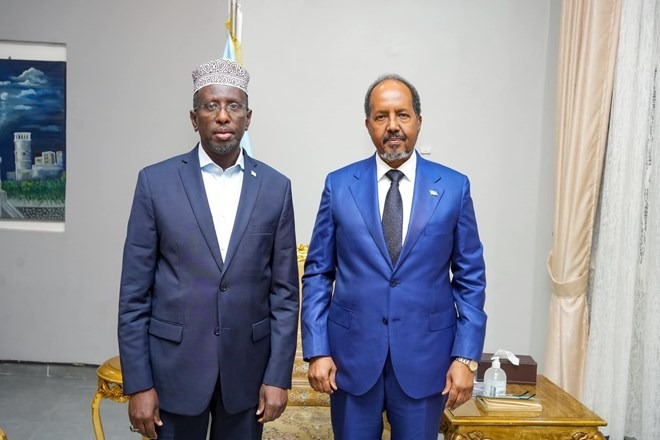
MOGADISHU, Somalia — In a rare move, Somali President Hassan Sheikh Mohamud visited at the residence of former President Sharif Sheikh Ahmed last night in Mogadishu, signaling a potential thaw in one of the country’s most tense political standoffs.
According to a statement from Sheikh Ahmed’s Himilo Qaran party, the two leaders focused first on resolving personal differences before turning to discussions about a proposed national consultative dialogue expected to take place within 15 days in Mogadishu.
“President Mohamud made it clear that he is committed to convening a national dialogue, and he asked me to play a role in ensuring it leads to a lasting agreement,” the statement reads.
“I reaffirm my willingness to support any initiative aimed at strengthening Somali unity. But this requires genuine engagement, compromise, and a shared vision.”
The meeting comes at a critical juncture. Opposition groups and regional leaders from Puntland and Jubaland have increasingly voiced concerns about governance and the upcoming elections.
Farah Ali, Somali political scientist, said, “This meeting is symbolic and strategic. President Mohamud must engage former leaders to unify the political space and reduce pre-election tensions.”
Opposition figures under the Somali Future Council plan a conference in Garowe, Puntland. “We aim for meaningful political change and hope dialogue in Mogadishu ensures stability,” a representative, who asked to remain anonymous, said.
Somalia struggles with fragile coalitions. Governance expert Ahmed Mohamed said, “Calling a dialogue isn’t enough. Leaders must involve experts, civil society, and regional representatives to ensure agreements are actionable.”
For ordinary Somalis, the late-night visit signals hope. Fartun Jama, a resident in Mogadishu, said, “We are tired of political fighting. If leaders agree, perhaps the country can finally move forward.”
The meeting may signal breakthrough, but observers remain cautious. Past dialogues faltered under factionalism.
As plans for the national consultative dialogue take shape, all eyes are on Mogadishu, and on the delicate balancing act between political pragmatism and public expectation.