



MOGADISHU, Somalia — The courtyard fell quiet as Asha Hassan stepped forward, her hands shaking slightly, her eyes fixed on the crowd gathered before her.
For eight years, she said, she has lived in the shadows — judged by neighbors, avoided by strangers and sometimes refused treatment by doctors who feared her diagnosis.
“But today,” the 28-year-old said softly, “I feel seen. I feel like I belong somewhere.”
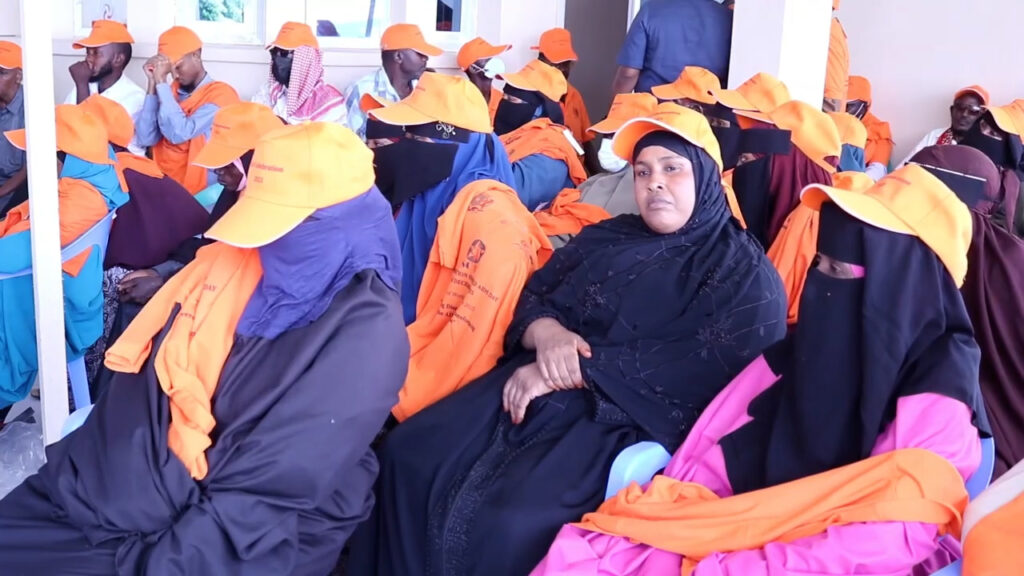
Hundreds of Somalis came together Friday to mark World HIV/AIDS Day, creating a rare public moment for people who often move quietly through society, trying not to be noticed.
The event, organized by the AIDS Prevention Committee along with the Banadir Regional Administration and the Somali Wehel Network, offered something many attendees said they rarely receive: acknowledgment, dignity and space to speak openly.
Speakers addressed the challenges of living with HIV in Somalia, where stigma frequently overshadows science, and where treatment, testing and education remain limited or out of reach.
Mohamed Ahmed Jim’ale, chairman of the AIDS Prevention Committee, said about 8,100 Somalis — children and adults — are living with the virus.
He said they face constant challenges, most of them rooted in community stigma and misunderstanding.
Jim’ale said the government has repeatedly been urged to expand care but has “failed to provide consistent support,” leaving many patients without treatment or counseling.
For people like Abdi Nur, 35, the gathering was a moment of relief. He said years of judgment and isolation had convinced him he had to suffer alone.
“Seeing others like me… it gives me hope,” he said.
Parents also spoke about the emotional weight of raising children while carrying the virus.
Fatima Ali, a mother of two, said she fears not the illness itself, but the way people might treat her family.
“Awareness days like this remind us we are not alone,” she said. “They remind us that our voices matter.”
Organizers said HIV/AIDS remains a critical public health issue in Somalia and urged families, leaders and health institutions to confront stigma with compassion and accurate information.
As the sun set over Mogadishu, the crowd slowly dispersed.
But for many, the day marked something rare — a moment of visibility in a society where silence has long been the rule.
“It is not easy to live with this virus,” Asha said as she stepped away from the microphone. “But today, I feel stronger than yesterday.”
Several names in this story have been changed to protect the privacy of those living with HIV, who often face discrimination