




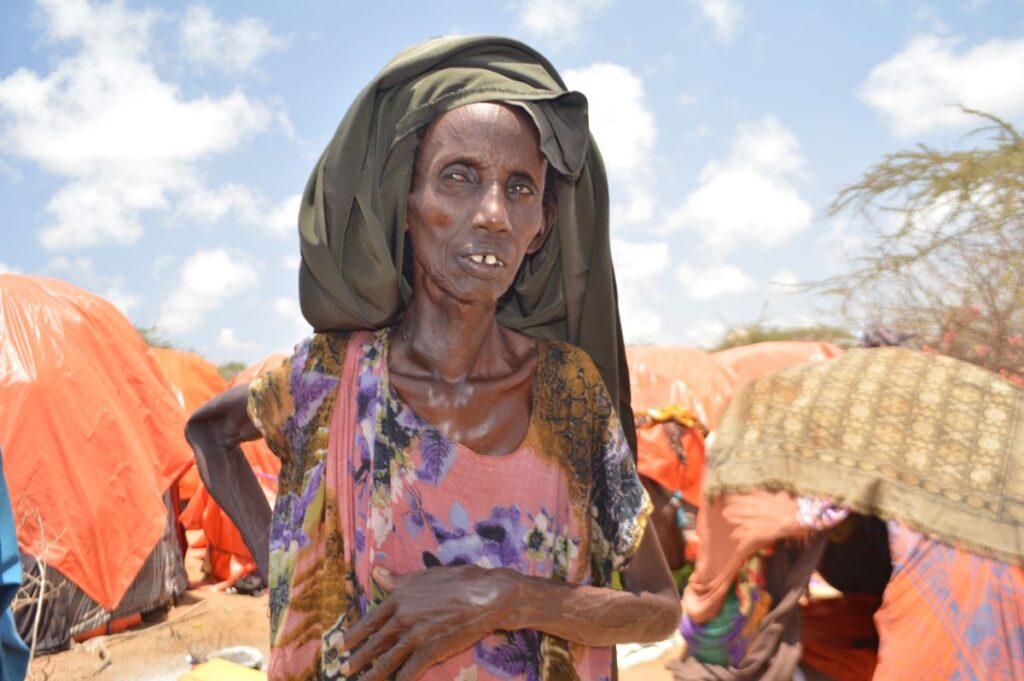
MOGADISHU, Somalia — Somalia faces one of its worst droughts in recent history. “The crisis has escalated from early warning to full-scale humanitarian emergency,” according to the Action Against Disasters Somalia (AADSOM) .
The AADSOM report warns that 6.5 million Somalis, nearly one-third, face crisis-level hunger by March 2026, including roughly 2 million in emergency-level food insecurity, highlighting severe national distress.
Women and children are most affected. “An estimated 1.8 million children under five are expected to suffer acute malnutrition,” the report says, including nearly 500,000 with severe acute malnutrition.
Even if April-June Gu rains are near average, “food insecurity will remain alarmingly high,” with 5.5 million people projected to face crisis-level hunger through mid-2026.
Rainfall fails, temperatures soar
The Deyr 2025 rainy season failed dramatically. “Most southern regions received less than 30 percent of average rainfall, causing crop failures and water shortages,” AADSOM reports.
Temperatures reached 35-40°C, rivers declined, and water points dried. La Niña and a negative Indian Ocean Dipole further suppressed rainfall, worsening conditions nationwide, the report says.
An Early Warning Alert on Dec. 8, 2025, confirmed severe drought. “The upcoming Jilaal dry season is expected to worsen the situation,” according to AADSOM’s report.
Displacement rises amid shrinking aid
Families are migrating in search of water, pasture, and aid. “Displacement settlements report growing numbers of newly arrived households, many having lost livelihoods,” the AADSOM report says.
In November 2025, the federal government declared a national drought emergency, appealing for aid. “Millions are already facing serious food insecurity,” AADSOM notes.
Funding shortfalls worsen the crisis. “The 2026 Humanitarian Needs and Response Plan targets just 2.4 million people, leaving millions without essential services,” according to AADSOM’s report.
AADSOM field teams say communities are exhausting coping strategies. “People are selling productive assets, children are leaving school, and water points are nonfunctional,” the report documents.
“Droughts are not new, but the frequency and severity are increasing,” Guled Osman, AADSOM executive director, said. “Without urgent support, lives will be lost.”
Call for urgent action
AADSOM urges immediate action: “International partners must mobilize resources rapidly to prevent deeper catastrophe and avert avoidable loss of life,” the report says.
Immediate interventions must provide water, protect livelihoods, expand food assistance, and ensure nutrition and health services, the report stresses, to stop the crisis from worsening.
“Without urgent action, Somalia risks sliding deeper into humanitarian catastrophe,” AADSOM warns, emphasizing the need for coordinated, timely support that can save lives and limit suffering.
AADSOM remains committed to affected communities: “We continue working closely with partners to deliver lifesaving assistance and support recovery efforts in the hardest-hit areas,” the report concludes.