



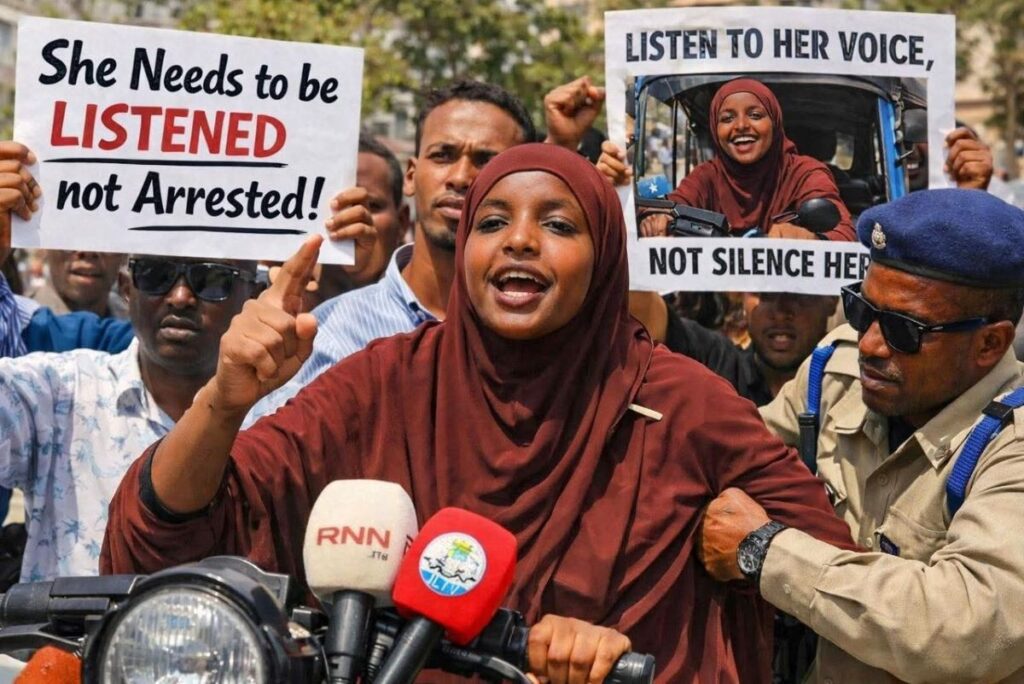
MOGADISHU, Somalia — Rickshaws (Tuk-Tuks) weave through Mogadishu as usual, yet familiar faces like Sadio Moalim are gone. Seized in broad daylight while advocating for detained colleagues, her absence leaves families anxious and uncertain.
Moalim, a mother and rickshaw driver, was taken from the street in broad daylight while advocating for her jailed colleagues, who remain detained beyond 24 hours.
“They came in the middle of the day and took her,” said Rahmo Moalim, Sadio’s sister. “She provides for her children. We cannot feed them without her.”
The drivers argue fuel was already in reserves before the U.S., Israel, and Iran conflict affected global prices. Authorities, however, responded by arresting peaceful demonstrators on the streets.
The arrests drew sharp condemnation from opposition leaders. Former President Sharif Sheikh Ahmed, ex-Prime Minister Hassan Ali Khaire, and former Mogadishu Mayor Thabid Abdi publicly criticized the detentions.
Ahmed’s Himilo Qaran Party delivered cash support to Moalim’s family, pledging to care for her children while she remains detained, offering relief amid growing community concern.
Family members said the support, while helpful, cannot replace Sadio’s presence. “We need her back,” Rahmo Moalim said. “Our home feels empty. The children keep asking about her.”
Local rights groups warned the detentions risk chilling peaceful dissent. Observers said protests reflect economic frustrations and highlight citizens’ limited avenues for safely voicing grievances.
In Mogadishu neighborhoods, the absence of Moalim and fellow drivers is felt deeply. Neighbors quietly support one another while rickshaws remain silent, symbolizing life interrupted and resilience challenged.