



MOGADISHU, Somalia — A brief congratulatory exchange has opened a wider diplomatic debate over Somalia’s foreign policy, sovereignty and its strategic relationship with Türkiye.
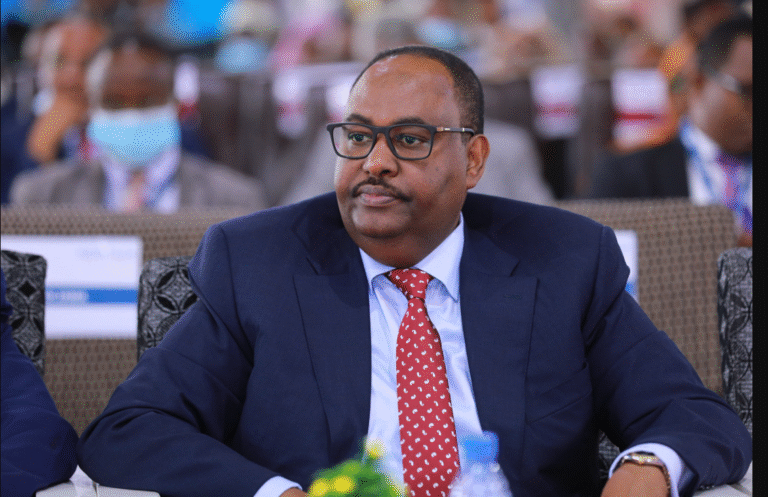
Somalia’s newly elected parliamentary speaker, Abdulkadir Mohamed Nur, publicly thanked Dr. Ziya Öztürkler, speaker of Northern Cyprus’ parliament, after receiving congratulations following his election.
The exchange was presented as a courtesy, but it attracted scrutiny because Northern Cyprus remains at the center of a decades-old international dispute.
The Turkish Republic of Northern Cyprus declared independence in 1983 but is recognized only by Türkiye, while the Republic of Cyprus is internationally recognized.
The United Nations and European Union recognize the Republic of Cyprus and do not recognize Northern Cyprus as an independent state.
The issue is sensitive for Somalia, which has repeatedly emphasized sovereignty and territorial integrity in its foreign-policy positions.
The message has raised questions about whether Somalia can defend its territorial integrity while publicly engaging with an administration whose sovereignty is rejected by most of the international community.
There is no indication Somalia has changed its formal position, but the message has attracted political and diplomatic scrutiny.
Reliable sources said the message surprised some officials within Somalia’s federal government, particularly officials working at the Foreign Ministry.
Diplomatic sources also said the exchange attracted attention among European officials, underscoring the sensitivity of Northern Cyprus among Somalia’s international partners.
The controversy is particularly significant because of Nur’s longstanding relationship with Türkiye, where he previously served at Somalia’s embassy before taking senior government positions.
Türkiye is among Somalia’s closest strategic partners, providing security, political, economic and development assistance through a relationship that has deepened significantly.
Ankara also strongly supports the Turkish Cypriot administration, making Northern Cyprus a sensitive issue in Türkiye’s foreign policy.
The situation places Mogadishu between its close partnership with Türkiye and its relationships with European governments that reject Northern Cyprus’ independence.
The Cyprus dispute dates back decades, with the island divided since 1974 after a coup backed by Greece sought union with Greece. Türkiye subsequently intervened militarily, and repeated United Nations-backed negotiations have failed to produce a comprehensive political settlement.
For Somalia, the distinction between diplomatic courtesy and formal recognition is important. An individual official’s public message does not automatically constitute recognition or establish a new national foreign policy.
The remarks carry particular weight because Nur is one of Somalia’s highest-ranking constitutional officials and leads the country’s legislature.
His message has therefore prompted questions over whether he consulted the Foreign Ministry before responding to the Northern Cypriot speaker.
For opposition leader Abdirahman Abdishakur, the controversy reflects deeper concerns about Nur’s election, experience and suitability for one of Somalia’s highest offices.
“This is the consequence of installing an illegitimate, inexperienced and handpicked individual in one of the highest offices of the state,” Abdishakur said.
He described Nur’s statement as “a reckless departure” from Somalia’s established foreign-policy position on a sensitive international dispute.
Abdishakur’s criticism reflects a broader argument that Somalia’s credibility depends partly on applying its principles of sovereignty and territorial integrity consistently.
If Mogadishu expects other countries to respect Somalia’s territorial integrity, critics argue, it must also be careful about appearing to endorse disputed territorial claims elsewhere.
Supporters of Nur, however, could argue that thanking another parliamentary speaker is simply diplomatic courtesy and does not amount to recognizing Northern Cyprus.
There is no public evidence that Somalia has established diplomatic relations with Northern Cyprus or altered its formal position on the Cyprus dispute.
The controversy, therefore, is less about an announced policy change and more about the diplomatic meaning attached to Nur’s public words.
The incident shows how seemingly routine diplomatic exchanges can become politically sensitive when they involve contested territories.
It also highlights how a short public message can be interpreted through the broader foreign-policy relationships of an entire government.
Somalia has strong reasons to preserve its strategic relationship with Türkiye, which has invested heavily in the country’s security, infrastructure and development.
At the same time, Mogadishu relies heavily on European countries for humanitarian assistance, development funding, political support and diplomatic engagement.
That makes sensitive issues involving Cyprus particularly difficult for Somali officials, who must manage relationships with partners holding different positions on the dispute.
For Nur’s critics, the controversy reinforces concerns about political judgment at the highest levels of Somalia’s government.
For the government, the message can be presented as a simple acknowledgment of congratulations rather than an indication of a foreign-policy shift.
But diplomacy often depends not only on what officials intend to say, but also on how their words are understood abroad.
For Somalia, that distinction carries particular weight because territorial integrity is a central pillar of its foreign policy, including its position on Somaliland and Somalia’s national unity.
The Northern Cyprus controversy has consequently become more than a question about one congratulatory message. It has become a test of diplomatic consistency and political judgment.
For now, there is no evidence that Nur’s message has changed Somalia’s formal position on Northern Cyprus.
But the political fallout shows that in international diplomacy, even a few words from a senior official can carry consequences far beyond their intended meaning.